I just ran across some student poetry from when I was an enrichment teacher in the 90's at George Fox Middle School. Some were displayed at Walter Reed Hospital in the pediatric ward for critically or terminally ill children and teenagers. The first one won a special recognition award. As an enrichment teacher, I worked with students from all levels of ability, including special education and gifted and talented. There is a mix of diverse students in these examples below. Over the years, I discovered that my students helped me get in touch with forgotten parts of my heart. I post their poems for you to hear the hearts of middle school students:
Ransom Poetry
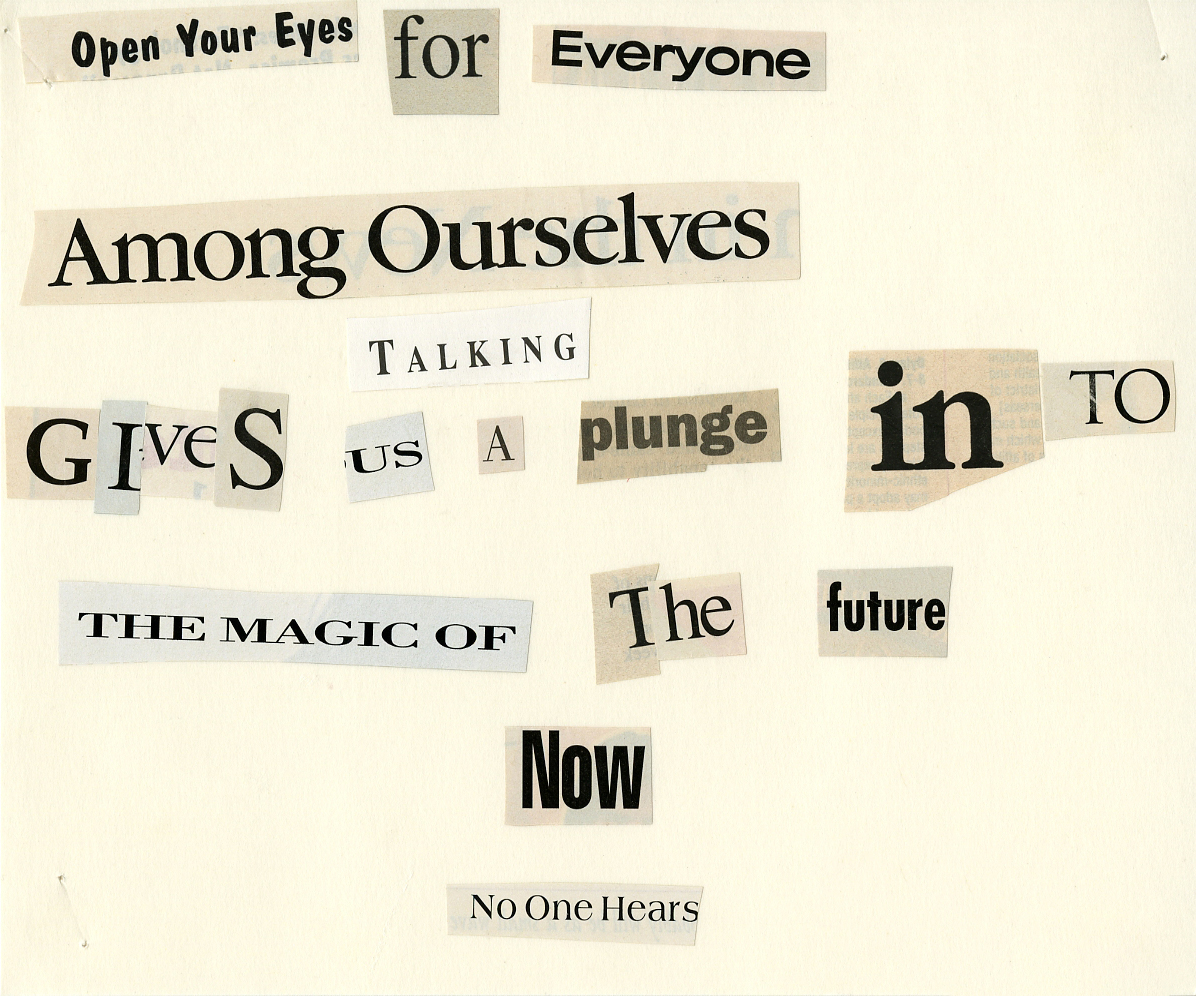
It's strange how something that was done more than 20 years ago can take on new layers of meaning today. A creative exercise I did with middle school students has caught my eye while cleaning out my file drawers. We called it cut up poetry. Another name is ransom poetry. I gave students scissors and a pile of magazines and newspapers. They then looked for ways to put together words and phrases they had cut out. These are some of the results:
![]() |
| Patrick Cook, George Fox Middle School, 1995? |
![]() |
| George Fox Middle School, 1995? |
![]() |
| Jennifer Long, George Fox Middle School, 1995? |
![]() |
| Katie Huffman, George Fox Middle School, 1995? |
![]() |
| Megan Burrall, George Fox Middle School, 1995? |
![]() | |
| Sarah Dillard, George Fox Middle School, 1995? |
Learning Life Lessons Through Reading
In a political climate when the arts are called into
question and funding is threatened, I am reminded of my days teaching my
12-year-old 7th graders. Many
of these students had never read a book on their own but once they did, not
only did they become better readers, but they became wiser human beings.
Every year I struggled to survive another year of teaching while trying to give students the language arts skills they needed. I discovered my students had learned some very important things from reading The Cay by Theodore Taylor, a novel included in the Struggle to Survive unit, part of 7th grade language arts. After students had read this book, I asked them the question, What did you learn from reading this book?
The excerpts below are in the words of my students:
I learned…
- Not to prejudge people but to get to know them.
- It helps to have a friend and that you should be cautious.
- I shouldn’t take things for granted.
- You learn things when you lose things after taking them for granted.
- No matter how hard the world holds you down, you have to keep trying.
- Even if you have a disability, you can still do most of the stuff normal people can do if you try.
- Not to judge someone by their looks or how they talk.
- You should always help others if they need your help.
- You can change things about yourself by spending time with one person for a while.
- Not to be racist.
- It takes something like blindness to let you really see the world that surrounds you.
- You should never give up because hard work pays off.
- If you use what you have wisely, you can survive.
- If you are not brave, strong and conservative, then you will definitely not survive.
- No matter how hard the task is that is in front of you, you can always finish it.
- It doesn’t matter who you meet or what you think about them, when you see them, it’s what’s inside that counts.
- It’s important to always have confidence in yourself. Always believe you can do anything, no matter what.
- It is important to stick together and have patience.
- You have to be independent.
- People are the same on the inside no matter what they look like on the outside.
- No matter what happens or who you’re with, you must always have faith.
- Blind people are just like us but just can’t see and that does not make them any less of a person.
- Even if you don’t like someone, you can learn to live with them.
- There was more prejudice around the world, not just in North America.
- You always have to be positive because if you just sit there and say you’re going to die, that’s not going to help you to survive.
- If everybody works together, you have a better chance to survive.
- You shouldn’t judge people by their tone of skin but by their wisdom, spirit and love.
I am wondering if our new President has read any books?
Diagonals
![]() |
| After a struggle, the quilt is finally inside the duvet cover. |
Corners define shapes. They are
guides when inserting one similar shape into another. Grabbing and holding on
to matching adjacent and diagonal corners is most important in some
tasks.
Last week, after washing our quilt
and duvet cover, David and I attempted once again to put the former inside the
latter. The procedure involves a series of steps. First I turn the cover inside
out so I can get a firm hold on the top two corners. While I hold tightly to
the quilt corners through the cover, it is David’s job to slide the duvet top
down to the bottom right-side out and over the quilt. Then the final step
is for me to hold tightly to the top cover and quilt corners while David
does the same at the bottom, at which point we both shake the quilt vigorously
to help everything align correctly.
It shouldn’t be too difficult — unless
I hold two diagonally-wrong corners, as I did this time. Because we have a
small bedroom, I usually stand on the bed while we maneuver this feat together.
Since the last time we did our duvet
dance, we had purchased memory foam for the top of our mattress. I discovered
the new surface makes balance difficult when grabbing and shaking. In the
confusion of mismatched corners and foam that remembered steps I didn’t want it
to remember, I lost my balance and rolled around on the bed.
Instead of tossing out a few
four-letter words, giggles erupted. And, since they are contagious, giggles
reached out to David and tickled him, too. Help — hahaha — I've fallen on my
bed —hahaha — and I can't — hahaha — get up! There we were with a confused mass
of quilt and duvet cover, laughing our heads off.
Being adults, however, and
recognizing that we had a chore to complete, we went about correcting our
mistakes — with some extra giggles thrown in — and finally got the cover on.
With a few shakes as we firmly held our correct corners, this time everything
fell into place and I remained standing tall on the bed.
Our mistakes leading to
uncontrollable laughter felt so good. This was a simple release in an everyday
moment, an example of making mistakes together, losing balance, losing control
and then discovering everything works out okay, especially if some laughter is
tossed into the recipe.
David and I will soon celebrate our
37th wedding anniversary. During these years together, we’ve mixed
up diagonals and lost balance but sometimes the tumbles are fun and ultimately
laughter balances the equation.
Note: If you prefer a more tame
experience, this video shows how one person can make this a boring chore
without the comedy: https://youtu.be/DRPfudNNd8Y
The POTUS is a Master
![]() |
| A word cloud from one part of the POTUS press conference. |
Today I looked at the transcript of Mr. T’s recent press conference. He
is the most amazing master of vague. This man has a tremendous flair for using very many superfluous
adjectives and is astonishing at using a lot of superlatives. And he’s very, very, very good—the greatest—at
repetition.
In the transcript, he is going 66 times and gonna 20 more, making that
80 times he demonstrated how forward looking he is.
Very appears 77
times in the transcript, 15 times together as twins and once as triplets. One
sentence of 38 words uses very four times (twice as doubles). The same adjective makes up 10% of the content
of the sentence!
Today he didn’t use a lot a lot as he usually
does—only about 20 times—and he moderated his use of amazing, terrific,
tremendous and fantastic. Was he feeling a little less fantastic today?
Oh, did I say that he excels at saying nothing?
So, we’ve been
very, very much involved, and other things. We had Jack Ma, we had so many
incredible people coming here. There are no — they’re going to do tremendous
things — tremendous things in this country. And they’re very excited.
We’re going to
have a very, very elegant day. The 20th is going to be something that will be
very, very special; very beautiful. And I think we’re going to have massive
crowds because we have a movement.
As a former English teacher, I have to wonder what his school essay exams might have looked like. I give him a D on his lexicon which lacks fluency, so important in problem solving and communicating with others on a precedential level.
Subscribe to:
Posts (Atom)